






 Blogs
Blogs Earth Day is a great time to encourage students to protect the planet by using literature that discusses sustainability, conservation, and environmental responsibility. Teachers can use books, stories, and poems about the environment to help students identify the importance of caring for the Earth while strengthening reading and critical thinking skills. Literature can help students connect emotionally with environmental issues and inspire them to take positive action. Below are 7 books across grade levels that can be used to teach students why it’s important to protect the planet for future generations.
These books are best suited for elementary school students.
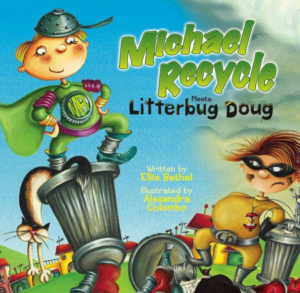
Michael Recycle Meets Litterbug Doug by Ellie Bethel.
Litterbug Doug is lazy, wasteful, and messy, and he refuses to recycle. Due to his careless habits, the town becomes polluted and filled with trash. Michael Recycle steps in to help clean up the town and teach Doug how to take better care of the Earth before it’s too late.
Teachers can pair this book up with the following activities:
- Trash Sorting Relay: Have students sort items into recycling, compost, and trash bins to have students practice how to dispose of trash properly.
- Before & After Posters: Have students draw the town before and after Michael Recycle helps. Discuss what they noticed, and cause and effect.
Why Should I Recycle by Jen Green.
This book highlights the importance of recycling, especially items like bottles, paper, and plastic. Teachers can pair this book up with the following activities:
- Recycling Poster Campaign: Have students create posters encouraging others to recycle and put them around school.
- Craft from Recyclables: Students can turn everyday items into art or useful objects!
These books are best suited for middle school students.
The Last Straw: Kids vs. Plastics by Susan Hood.
This book is filled with poems to teach students about the growing plastic problem and a few young activists who are speaking for change. Teachers can pair this book up with the following activities:
- Poetry Writing Response: Students write down their own environmental poems inspired by the book.
- Debate or Discussion: Using the text, have students answer the following question, “Should single-use plastics be banned?”
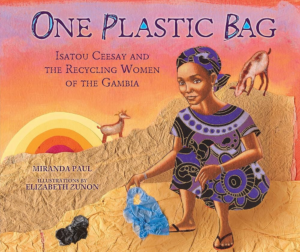
One Plastic Bag: Isatou Ceesay and the Recycling Women of the Gambia by Miranda Paul.
This is a true story about a woman who helped solve a serious trash problem by teaching women in her village how to collect plastic bags and weave them into purses and baskets. It highlights how creativity and teamwork can help protect the environment.
Teachers can pair this book up with the following activities:
- Sequence of Events Chart: Have students map how Isatou’s idea led to change.
- Design a Product Activity: Students can design a product made from waste and “pitch” it to the class.
The Great Kapok Tree by Lynne Cherry.
This classic story teaches students about deforestation and the importance of rainforests. A man is sent to chop down a kapok tree, but he ends up falling asleep and being visited by various rainforest animals who explain why their tree is so important to them. Elementary students may also enjoy this book! Teachers can pair this book up with the following activities:
- Rainforest Diorama: Students can create a model showing the different aspects of a rainforest.
- Persuasive Writing: Have students write a letter from the animal’s perspective to protect the tree.
These books are best suited for high school students.
The Sixth Extinction by Elizabeth Kolbert.
This book addresses the future of the world and how many plants and animals on Earth are disappearing at a very fast rate. It touches upon climate change, pollution, deforestation, and overfishing. Teachers can pair this book up with the following activities:
- Solution Proposal: Students can design a realistic plan to reduce one major environmental threat.
- Data Analysis: As a class, have students examine graphs or data related to extinction rates and discuss trends.
The Omnivore’s Dilemma by Michael Pollan.
In this book, Pollan explains where food comes from and how the choices we make about what we eat affect the environment. It follows different types of meals to show how food is produced and the impact on nature, animals, and people. Teachers can pair this book up with the following activities:
- Food Systems: Have students compare different food systems (industrial vs. local vs. organic).
- Food Source Investigation: Students can trace where a meal comes from and its environmental impact.
Incorporating literature into Earth Day lessons engages students in meaningful conversations about today’s environmental challenges, like climate change, plastic pollution, deforestation, and biodiversity loss, while strengthening their critical thinking skills. Stories, poems, and informational texts can inspire students to explore these real-world issues and understand how communities and individuals can make a difference. Books that emphasize sustainability and responsible decision-making encourage students to develop a deeper appreciation for the Earth and recognize their role in protecting it. While creating meaningful environmental change can be difficult, teaching students about the Earth can inspire small actions that collectively make a significant impact.
About the Author

Caitlyn McGuigan is a Professional Learning Specialist at Teaching Channel. She holds a B.A. in Integrated Educational Studies, as well as an M.A. in Curriculum and Instruction. Caitlyn has a dual credential in Multiple Subject and Special Education. With her extensive knowledge and experience, Caitlyn develops content that is thoughtfully designed to be accessible, engaging, and inclusive for all students, ensuring that diverse learning needs, abilities, and backgrounds are effectively supported. She enjoys language arts, especially creative writing. Her enthusiasm for the written word drives her to explore new ideas, inspire creativity in others, and continually refine her craft.
Fun Fact: Caitlyn has a scar on her forehead like Harry Potter.