 Blogs
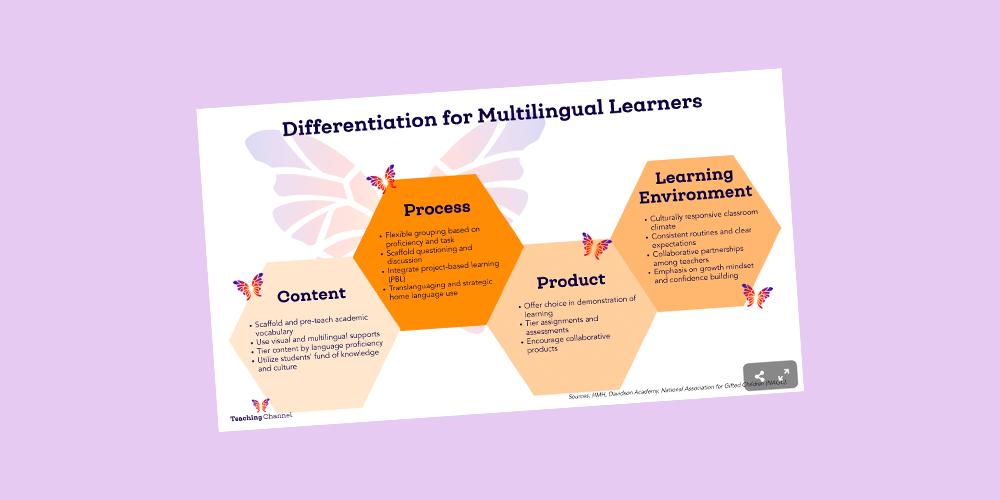
Blogs This framework for thinking about differentiation focuses on multilingual learners. It highlights research-informed strategies that honor students’ linguistic backgrounds, cultural identities, and funds of knowledge while supporting their growth across all proficiency levels. Consider how these strategies can strengthen your instructional practice and deepen your commitment to meeting every learner exactly where they are.
Content Differentiation for Multilingual Learners
- Scaffold and pre-teach academic vocabulary
- Use visual and multilingual supports
- Tier content by language proficiency
- Utilize students’ fund of knowledge and culture
Process Differentiation for Multilingual Learners
- Flexible grouping based on proficiency and task
- Scaffold questioning and discussion
- Integrate project-based learning (PBL)
- Translanguaging and strategic home language use
Product Differentiation for Multilingual Learners
- Offer choice in demonstration of learning
- Tier assignments and assessments
- Encourage collaborative products
Learning Environment Differentiation for Multilingual Learners
- Culturally responsive classroom climate
- Consistent routines and clear expectations
- Collaborative partnerships among teachers
- Emphasis on growth mindset and confidence building
Sources: HMH, Davidson Academy, National Association for Gifted Children (NAGC).
About Author

Betsy Butler (she/her) is a Professional Learning Specialist at Teaching Channel. She holds a B.A. in English, a Master’s in Education, and has been teaching since 1992. Betsy uses her three decades of teaching experience to write and revise our courses while selecting the perfect accompanying texts. Her specialty areas include ELA, special education topics, behavior management, and mental health.
Fun Fact: Betsy’s daily conquest is solving the New York Times crossword puzzle!