







 Blogs
Blogs AI has become a regular part of teaching, but with new platforms and applications appearing all the time, it can be hard to know where to start. Should you use ChatGPT or Gemini? What’s the difference between MagicSchool and SchoolAI? Which platforms are designed for teachers, and which ones are best suited for student use?
The good news is you don’t need to learn every AI tool. Finding just one or two that fit naturally into your teaching routine can save time creating lesson plans, classroom resources, differentiated learning materials, and assessments.
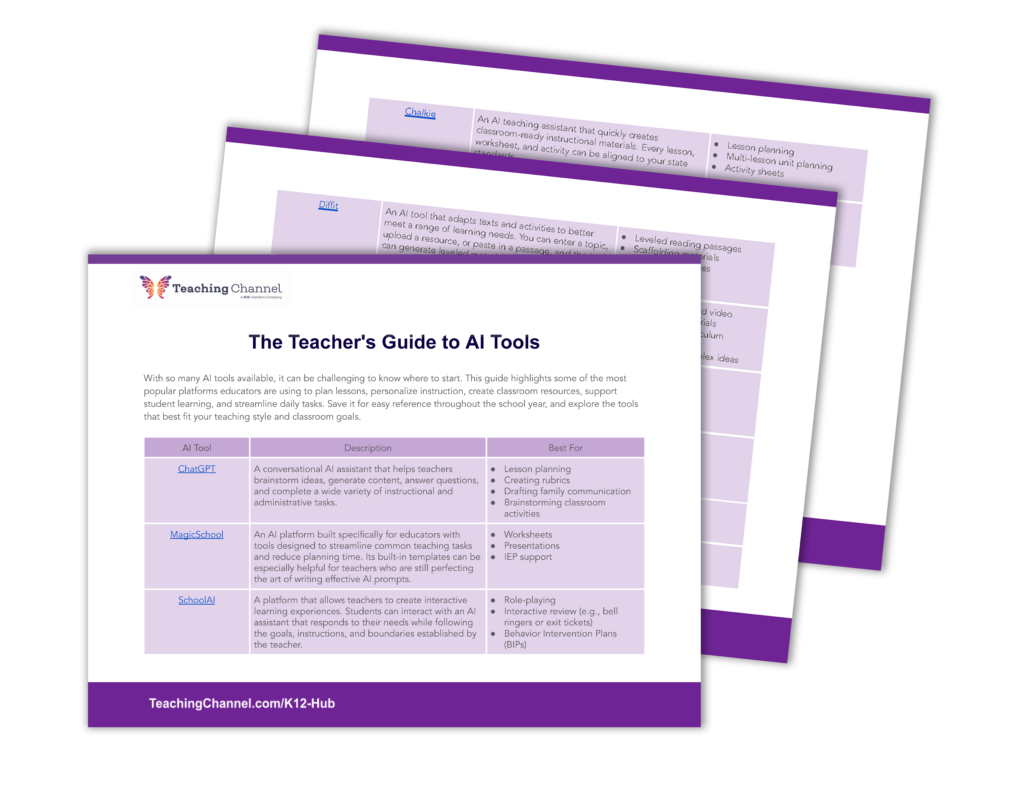
To help you navigate the growing number of AI options, we’ve created The Teacher’s Guide to AI Tools, a quick-reference guide featuring some of the most popular AI platforms educators are currently using. Inside, you’ll find a brief overview of each tool, what it does, and how teachers are using it in their classrooms.
Whether you’re looking to create differentiated materials, design engaging learning activities, streamline feedback, or simply make planning a little easier, our guide can help you compare your options and find the best fit, without spending hours researching websites and features.
Like any classroom resource, AI is most effective when used with your professional expertise. It can help generate ideas, organize information, and simplify repetitive tasks, but your knowledge of your students, your curriculum, and your classroom is what brings learning to life. Think of these tools as teaching assistants that support your work, giving you more time to focus on the parts of the job that only you can provide.
Click the button below to download The Teacher’s Guide to AI Tools and keep it handy throughout the school year. Whether you’re trying AI for the first time or looking to further expand your toolkit, we hope this quick reference becomes a resource you return to whenever you’re ready to explore a new AI possibility.
About the Author
Samantha Lundberg is the Associate Director of Content Development at PDI. She holds a B.S. in School Health Education, as well as a M.A. in Special Education with an emphasis in Applied Behavior Analysis. Samantha draws on her extensive knowledge to develop and refine engaging, research-based courses. Her work centers on helping educators create inclusive, supportive learning environments where social-emotional growth is prioritized and both students and teachers feel seen, supported, and mentally well.
Fun fact: Samantha has been to all of the U.S. Disney parks, as well as 3 of the international parks! She hopes to visit all of the parks someday.