

5 Best Practices for Integrating AI in the Classroom
As AI tools shift to student-facing platforms, these strategies support thoughtful classroom integration and build digital confidence.
Revolutionizing Teacher Training with AI and Classroom Simulations
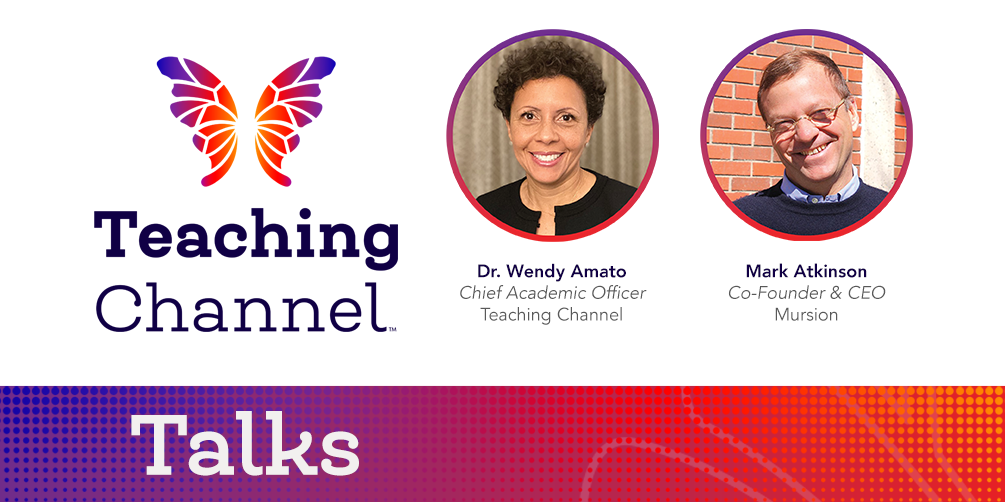
Join Dr. Wendy Amato in this episode of Teaching Channel Talks as she explores the intersection of artificial intelligence and ethics in education with Mark Atkinson, CEO of Mursion.

Outsmarting the Bots: 5 Strategies to Create AI-Resistant Assignments
When chatbots can write essays in seconds, it's time to rethink the assignment. These ideas make it tougher for AI to take over and easier to keep students engaged.

Artificial Intelligence (AI) in Our World (Grades 3-5)
Designed to spark curiosity, this lesson plan gives upper elementary students a first look at how AI works and why it matters. Built-in scaffolds and multiple access points support a wide range of learners.

How to Use AI for Back-to-School Efficiency
From lesson planning to student activities, AI can support what you already do well. This webinar from Khan Academy and Teaching Channel shares strategies to help you start the school year strong.

3 Activities for Practicing AI Literacy
Turn your students into “AI detectives” as they explore whether AI is really always right. These hands-on activities support ethical thinking and digital responsibility in an AI-powered world.

65 AI Prompts for Lesson Planning
Lesson planning doesn’t have to feel like a grind. This prompt list helps you utilize AI tools creatively and efficiently, allowing your time to go further and your ideas to become sharper.
How to Connect with Students Personally and Make Content Relevant Using AI
This on-demand webinar offers classroom management strategies and tips for using AI to make learning more relevant, all grounded in trust and connection.

4 AI Tools to Streamline Family Communication
AI isn’t just for planning lessons—it can also make school-home communication quicker and easier. These four tools help teachers save time while staying connected with families.
- What is AI in Education?
- How AI is Already Being Used in K-12 Schools?
- What are the Benefits and Concerns Around AI in Education?
- What Questions Should Schools Ask Before Using AI Tools?
- Do K–12 Schools Need an AI Policy?
- What Does AI Literacy Look Like for K–12 Students?
- Examples of AI in Action at School
- How to Design AI-Resistant Assignments and Assessments
What is AI in Education?
What is AI in Education?
Artificial Intelligence (AI) describes digital systems capable of performing tasks that usually need human intelligence, such as writing, predicting, organizing, and adapting. In education, this can include AI-generated quizzes, writing feedback, personalized learning plans, or tools that analyze student performance data.
Resources:
5286: Unlocking the Potential of Artificial Intelligence in Education
Once science fiction, AI technologies are increasingly embedded in our lives. In this teacher favorite continuing ed course, you'll develop a foundational understanding of AI, explore specific AI tools to streamline your teacher workflow, and consider policies around safe and ethical uses of AI in the classroom.
Artificial Intelligence (AI) in Our World (Grades 3-5)
Designed to spark curiosity and promote understanding, this lesson plan introduces students to AI concepts and helps them recognize AI’s presence in their everyday lives.
How AI is Already Being Used in K-12 Schools?
How AI is Already Being Used in K-12 Schools?
AI is already a part of how many educators speed up lesson planning, brainstorm classroom activities, and adjust classroom content for different learners. It's become a quiet assistant saving time while helping with feedback, translation, and even family communication.
At the district level, AI is starting to shape how data gets used, how schedules are built, and how support staff do their work. The potential is real, but so is the need for clear expectations, shared language, and a plan that keeps teaching at the center.
Resources:
5328: Harnessing Artificial Intelligence for Innovative Instruction
Turn AI into a practical planning partner with tools that help you create lessons, adjust materials, and support student engagement. This course offers real strategies for using classroom AI without losing your voice or time.
What are the Benefits and Concerns Around AI in Education?
What are the Benefits and Concerns Around AI in Education?
Teachers are finding that AI can help lighten the load. In just a few minutes they can build lesson plans, summarize student feedback, and even generate IEP suggestions. With less time spent on repetitive tasks, there’s more space for small group instruction, relationship-building, and professional learning.
But the same tools that save time can raise real concerns. Without clear policies in place, students may lean too heavily on AI for their work, and teachers may hesitate to use these tools at all. Concerns about bias, data privacy, and reliability make it even more important to approach AI use with purpose.
For school and district leaders, AI offers both promise and pressure. AI presents a clear benefit in schools where time and staff are both stretched thin, but districts need to define what responsible use looks like, how staff will be trained, and how student data will be protected. Otherwise, well-meaning tech adoption can quickly lead to confusion or inconsistent practices across schools.
Resources:
The Benefits and Challenges of AI in Schools
This infographic outlines just some of AI's benefits, from personalized learning to data-driven insights, and spotlights areas of caution related to ethics, equity, and the very nature of learning.
What Questions Should Schools Ask Before Using AI Tools?
What Questions Should Schools Ask Before Using AI Tools?
AI tools may promise faster grading, personalized learning, or simplified planning. But before any new AI tool makes its way into the classroom, educators need to know whether it truly supports students and instruction.
Schools need to ask what the tool is solving, who benefits from it, and how it fits into current teaching practices. Questions about training, accessibility, and data privacy should come early, not after rollout. Strong policies are important, but so is a shared understanding of what these tools are doing and why.
Resources:
Do K–12 Schools Need an AI Policy?
Do K–12 Schools Need an AI Policy?
Creating an AI policy gives schools a clear starting point. It helps staff make consistent choices, ensures student data is handled responsibly, and lays the groundwork for training, communication, and long-term planning. Without shared expectations, AI use can vary widely between classrooms, causing confusion for educators, families, and students.
A strong AI policy doesn’t have to be complicated, but it should be intentional. This involves identifying which tools are approved, understanding how they support instruction, and determining what safeguards are in place for privacy and access. It also means setting clear norms around academic integrity and giving teachers the confidence to use AI in ways that align with their goals.
Resources:
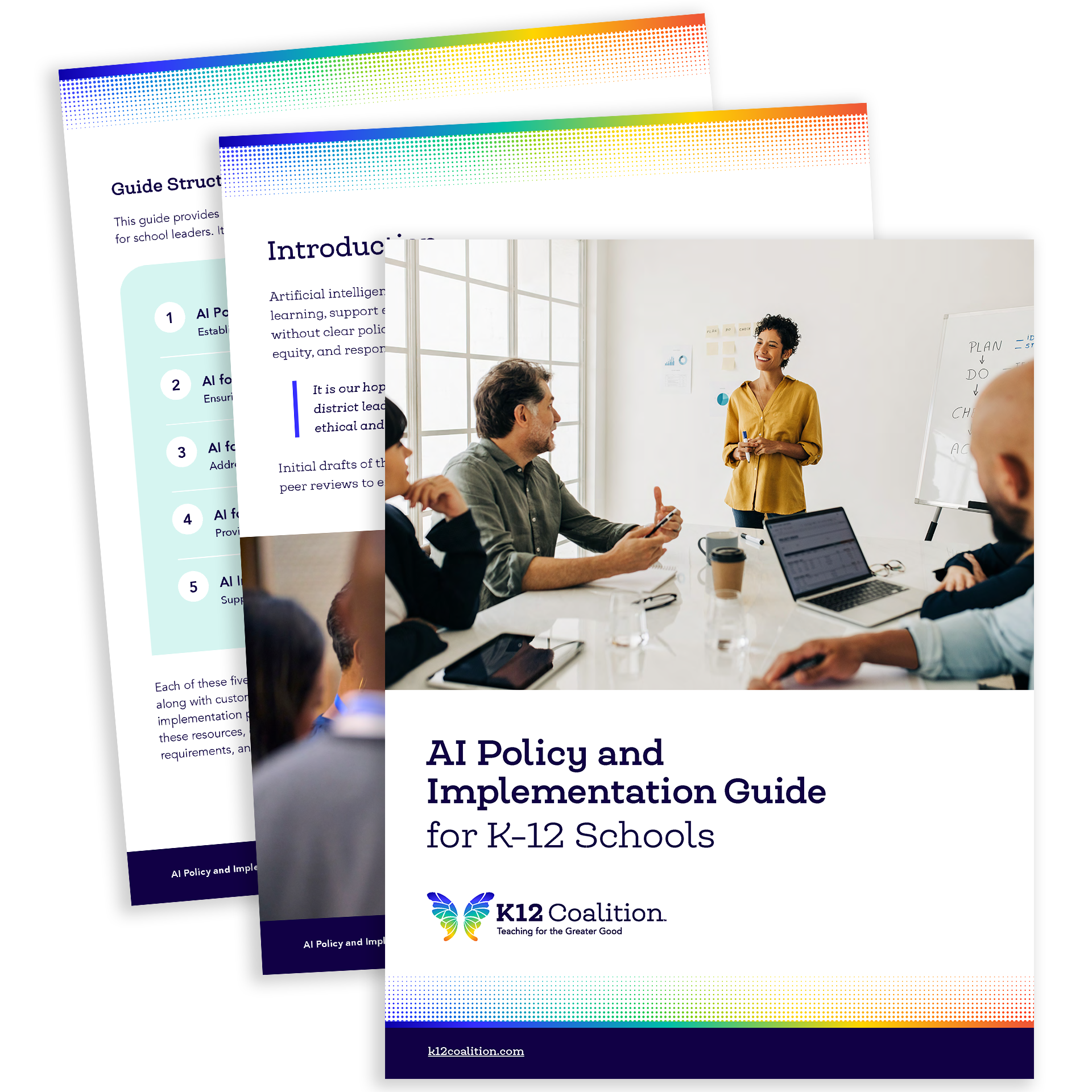
AI Policy and Implementation Guide for K-12 Schools
This guide gives school and district leaders a practical starting point to develop, refine, and implement AI use that aligns with instructional goals, legal compliance, and ethical standards.
What Does AI Literacy Look Like for K–12 Students?
What Does AI Literacy Look Like for K–12 Students?
AI is shaping how we think, write, and explore information, even when we’re not aware it’s happening. Students need to understand how algorithms influence what they see, how data is collected, and how their choices interact with these systems. Teaching AI literacy gives students the skills to recognize these patterns and respond to them with awareness.
This work belongs across grade levels and subject areas. They can learn to ask better questions, verify what they find, and recognize where these tools fall short. In classroom application, this might be comparing answers from different AI chatbots, evaluating bias in generated text, or discussing how data is used to shape resources. These activities build critical thinking while reinforcing digital responsibility.
Resources:
5313: Teaching Artificial Intelligence (AI) Literacy for Students
In this timely course, you’ll develop lessons and strategies to teach students how AI systems work, how to use them safely and effectively, and how to thoughtfully evaluate the ethical implications, societal impacts, and data privacy concerns AI technologies present.
3 Activities for Practicing AI Literacy
These three classroom activities empower K-12 students to become critical thinkers and responsible users of AI. Students will become “AI detectives,” investigating the accuracy and potential biases of AI-generated content, and grappling with ethical dilemmas surrounding its use.
Celebrate AI Literacy Day with Hands-On Exploration!
Did you know that Friday, April 19th is National AI Literacy Day? One impactful and engaging way to build students’ AI literacy is through hands-on exploration of AI tools.
Examples of AI in Action at School
Examples of AI in Action at School
Across the country, teachers and school leaders are already using AI to solve everyday challenges. One high school English teacher uses AI to generate multiple versions of a text so students can self-select based on reading comfort. A fifth-grade team uses it to create weekly newsletters that go out in multiple languages. And a science department leans on it to draft student-facing instructions for lab reports, saving hours every month.
These tools aren’t replacing the teacher’s voice or judgment. Instead, they act as a helpful assistant that keeps things moving. Used intentionally, AI can help educators stay focused on what matters most: designing effective lessons, connecting with students, and adapting instruction in real-time.
Resources:
5306: Unveiling Efficiency & Engagement with the Magic School AI Tool
Explore Magic School AI, a free tool built for teachers that streamlines lesson design, IEPs, assessments, and communication. This course walks you through core features and creative uses that save time and support real classroom needs.
5357: Artificial Intelligence Essentials for Educators
Build a clear, practical foundation in AI through this beginner-friendly course for educators. Explore tools, create a lesson, and feel confident using AI to support teaching and learning.
5 Best Practices for Integrating AI in the Classroom
AI use is shifting from planning support to student-facing tools, and that shift brings new opportunities—and responsibilities. These five best practices offer a starting point for introducing AI in ways that support learning and build digital confidence.
65 AI Prompts for Lesson Planning
Stuck staring at a blank planning doc? These AI prompts help jumpstart your thinking, sharpen your lessons, and bring fresh energy to everything from rubrics to reteach moments.
How to Design AI-Resistant Assignments and Assessments
How to Design AI-Resistant Assignments and Assessments
AI makes it harder to tell what students know. Essays, lab reports, summaries, and reflections can now be generated by a chatbot in seconds. This potential overreliance can have lasting effects. Students may move on without grasping core concepts, and teachers may assume they’re ready for the next step when they’re not. The short-term gain in time often comes at the cost of deeper understanding.
There’s also the risk of false positives in AI detection. Plagiarism tools aren’t always accurate, and when suspicion falls unevenly, it can erode trust between students and teachers.
When that happens, the value of traditional assessments starts to break down. Grades may improve while actual learning fades. Teachers lose visibility into student thinking, and students lose confidence in their own work.
One way to protect learning is by designing assignments that ask for process, explanation, or revision over time. These tasks make AI shortcuts harder to use and give teachers a clearer view of what students truly understand.
Resources:
5345: Rethinking Assignments and Assessments in the Age of Artificial Intelligence
In this course, you'll gain the strategies to intentionally design assignments and assessments that are AI-resistant or AI-integrated, depending on your instructional goals. Develop practices to encourage academic integrity while cultivating critical thinking, creativity, and authentic learning.
Outsmarting the Bots: 5 Strategies to Create AI-Resistant Assignments
Even in the age of AI, it’s possible to design assignments that reflect what students actually know. These five practical strategies help create work that’s more difficult for chatbots to complete and more meaningful for students to tackle.
